
Low FODMAP Ratatouille
Recipe reproduced with permission from Glenda Bishop, a Registered Nutritionist and wellness coach. Reviewed and updated by Hannah Pritchard, a Registered Dietitian and Researcher.
Do you want an easy low FODMAP ratatouille recipe? This page has you covered!
Ratatouille is one of my favourite vegetable dishes. It’s got so much flavour that you almost don’t know what to do with it, yet it’s so easy to cook.
Seriously, just chop up the veggies, stick them in a pot and let them cook. Now that’s my kind of cooking. And you can make ratatouille low FODMAP quite easily with just a few small changes.
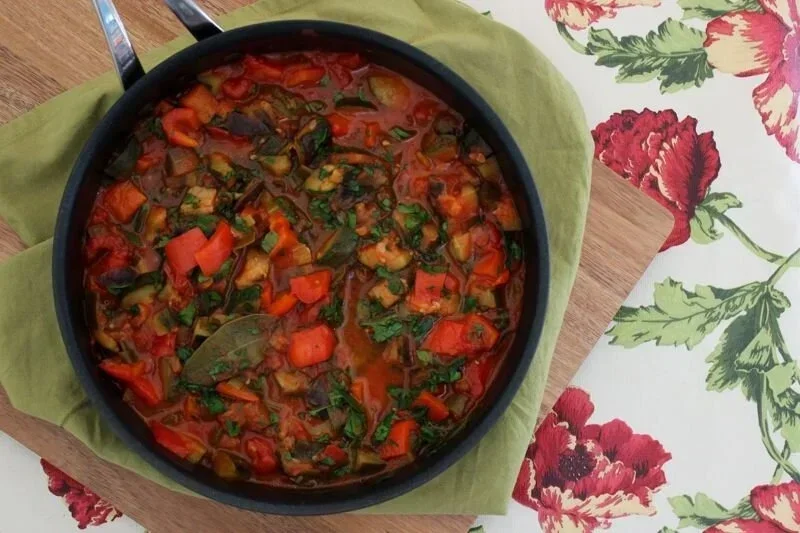
In terms of ingredients, the main FODMAP sources in a regular ratatouille are onion and garlic. These are easy ingredients to work around though with some simple swaps. For example, you can use the green tops of a spring onion instead of the onion and use garlic-infused olive oil instead of the garlic. Flavour problems solved!
The other potential issue has to do with the amount of veggies included. When zucchini/courgette is present in very large amounts, the levels of fructans (a type of FODMAP) can get a bit high (1). But that’s easily solved by weighing the zucchini/courgette so you don’t overdo it.
This recipe sticks to the recommended portion guidance, set by Monash University, who test the FODMAP content of ingredients, and provide portion guidance depending on the FODMAP levels.
Now, I already said I liked ratatouille because it’s so easy to make and tastes amazing, but I also like it because it’s incredibly versatile, making this a winner of a dish (see the serving ideas below).
To start with, you can eat it on its own as a very chunky soup or stew. But if you want to give it a bit more oomph, serve it alongside cooked meats (especially lamb or chicken) and mashed potatoes or rice.
It’s also delicious with cooked eggs and can be used as a base for making baked eggs/Shakshouka.
Ratatouille can also be used as a pasta sauce, on its own or in combination with proteins such as meats, fish or brown lentils.
You can also freeze ratatouille, although the vegetables will be a tad mushier when they’re defrosted, but there are many ways you can use it where that won’t matter at all (e.g. pasta sauce or baked eggs).
So what are you waiting for? How about making up some low FODMAP ratatouille today.
Following a low FODMAP diet can be challenging, but finding suitable low FODMAP recipes that are easy to follow and delicious to eat, such as this low FODMAP ratatouille can be part of your recipe kit.
For more information, you can read about why gut health matters or check out our other recipes for further inspiration when you’re following the low FODMAP diet.
This low FODMAP ratatouille recipe is also gluten-free. If you would like more information on this - we have written an article on Gluten Intolerance Symptoms plus information on Food Intolerance Testing.
Low FODMAP Ratatouille
Makes: 6 servings
Serving size: 1/6 of recipe (about 1 cup)
Prep time: 10 mins
Cooking time: 30 mins
Special equipment: just a large pot with a lid
Ingredients
1 tbsp extra virgin olive oil
2 tsp garlic-infused olive oil (see notes)
330g eggplant / aubergine (1 medium), diced
400g zucchini / courgette (2 small), diced
250g red capsicum / bell pepper (2 medium), diced
300g tomatoes (3 medium), diced
75g spring onion tops (green parts), sliced
300g (1 1/4 cups) passata (see notes)
2 bay leaves
Salt and pepper to season
1/4 cup chopped fresh parsley
Method
1. Heat the oil in a large deep pot (mine holds 4L).
2. Add the eggplant / aubergine and zucchini / courgette, cook and stir for 2 minutes.
3. Add the capsicum / pepper and tomatoes, cook and stir for another 2 minutes.
4. Add the green spring onions, passata and bay leaves.
5. Mix and then cover the pot and simmer for 30 minutes.
6. Remove from the heat and stir in the fresh parsley. Serve as desired.
Serving suggestions:
- Use as a side dish for cooked meats, along with mashed potatoes or rice. It goes very well with lamb or chicken.
- Brighten up your eggs by serving it with fried or poached eggs and suitable toast.
- Use it as a base for baked eggs served on top.
- Use as pasta sauce - bulk it up with some protein by adding a suitable cheese, cooked meats, fish or brown lentils.
- Eat it as a thick soup and dunk in some day-old suitable bread or toast. We have a recipe for low FODMAP tomato soup too.
Ingredient Notes:
- Based on the recommended portion sizes of individual ingredients in the Monash University Low FODMAP Diet app at the time of publication, this recipe should be low FODMAP provided that the recommended serving size for this recipe is not exceeded.
- Garlic-infused olive oil is a low FODMAP ingredient because FODMAPs are not soluble in oil. It is safest to use a commercially-prepared garlic-infused olive oil.
- Make sure that you only use the green tops of the spring onions (scallions), since the white bits are high in fructans.
- When selecting a passata (tomato puree), check the ingredients to make sure it is just tomatoes and salt, with no added ingredients such as garlic, onions or flavours.
- This recipe is naturally gluten-free, dairy-free and nut-free. However, if you have an allergy to any of these items, or have coeliac disease, please check the labels on any purchased ingredients to ensure they are safe for your requirements.
Following a low FODMAP diet can be overwhelming, but you don’t have to do it alone. As Registered Dietitians, we provide evidence-based guidance to help you manage your symptoms and find food freedom. You can contact us to find out more.
If you’re ready to get personalised dietetic support, you can book a consultation with us.
Hungry for more? Browse our full directory of Low Fodmap Recipes
Latest Gut Health News: Deep dive into our IBS and Digestive Health Blogs
Stay Connected: Join our community for gut health tips on Facebook and Instagram