
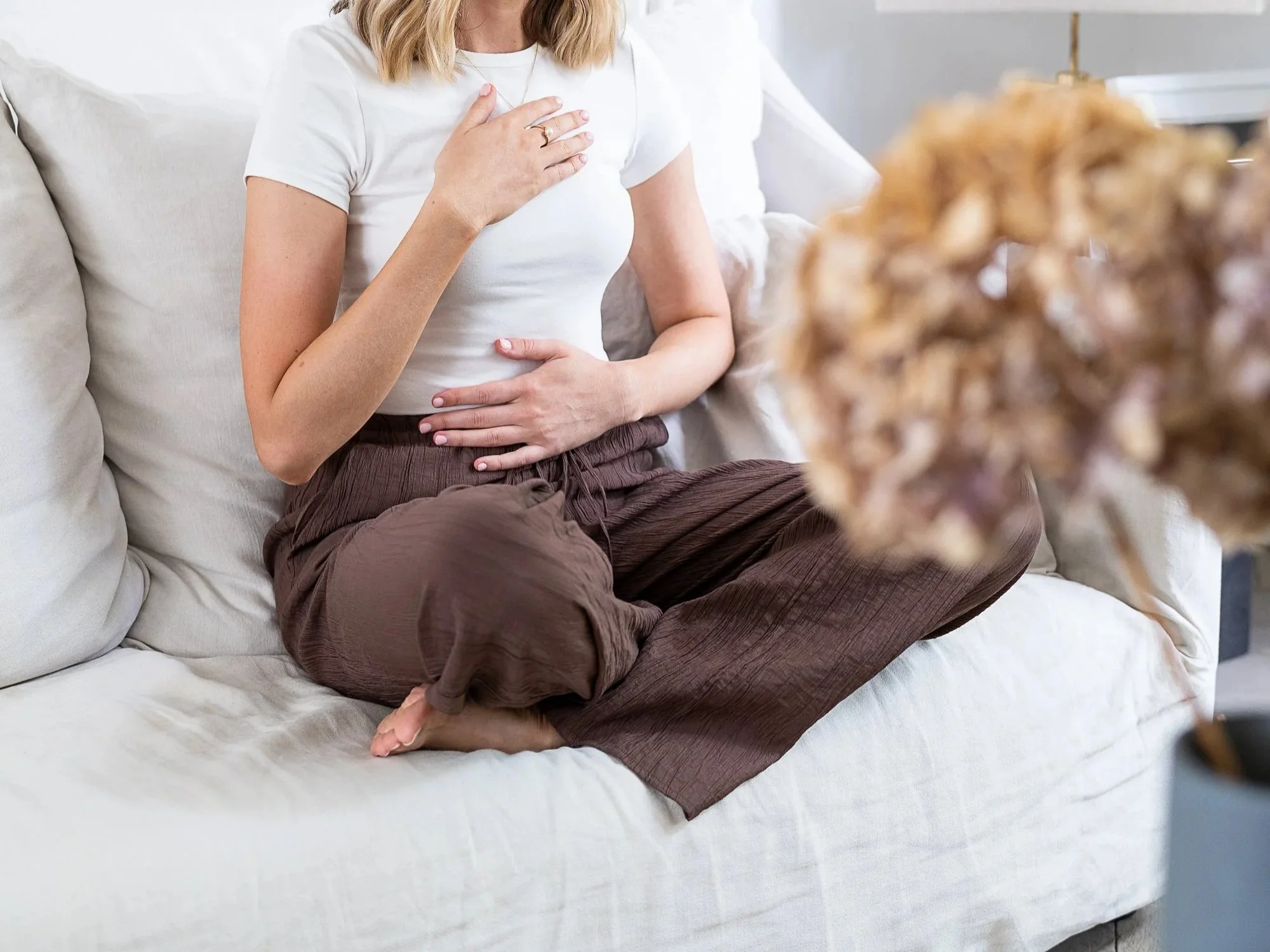
Article originally provided by Rachel Eagleton, a clinical nutritionist, and reviewed and updated by Hannah Pritchard, a registered dietitian and researcher.
Are you wondering whether there’s a connection between gut health and perimenopause or menopause?
Changes to periods, hot flushes and sleep are well-known changes, but some women also notice digestive symptoms such as bloating, wind or abdominal discomfort, to name a few.
Emerging research suggests there may be a two-way relationship between female sex hormones and the trillions of microorganisms living in our digestive system, the gut microbiome (1).
In this article, we explore what the research tells us so far and 5 practical ways to support your gut health during this stage of your life.
Quick click contents:
· What happens to your gut during perimenopause and menopause?
· 5 ways to support your gut health during perimenopause and menopause
· What to do if you have gut symptoms during perimenopause or menopause?
· FAQs
What happens to your gut during perimenopause and menopause?
During perimenopause, oestrogen (a hormone) levels fluctuate before eventually declining after menopause (1).
Research suggests these hormonal changes may also influence the composition and function of the gut microbiome, including microbial diversity and the substances gut bacteria produce (1,2,3).
One particularly interesting connection is the estrobolome, a collection of gut bacterial genes involved in the metabolism of oestrogen.
This means the relationship may work in both directions: hormones can influence the gut environment, while gut bacteria participate in how estrogen is metabolised and recirculated (1).
If you’d like to explore this emerging area further, you can read about the estrobolome and how the gut may influence menopause.
What about the gut-brain axis and exercise?
The gut also communicates with the brain through the gut–brain axis.
Researchers are looking into whether changes in gut bacteria and their metabolites during perimenopause could contribute to symptoms such as mood changes (1).
And what about exercise?
Physical activity may be another piece of the puzzle, with research linking movement with differences in microbial diversity and metabolic health during this life stage (4).
For information about the wider symptoms and management of menopause and perimenopause, visit the NHS menopause guide (5) or this guide from the Royal Women’s Hospital.
It's a complex area, with many factors involved in the development and management of perimenopause and menopause. Protein adequacy, blood glucose management and supporting a healthy body weight are also important nutritional considerations during perimenopause and menopause. Here, however, we’re focusing specifically on gut health.
5 ways to support your gut during perimenopause and menopause
There isn’t one food that will “fix” your gut or balance your hormones during menopause. Instead, you may want to focus on your overall dietary pattern.
The strongest evidence supports eating enough fibre and following a varied, predominantly plant-rich diet. At the same time, other foods, such as fermented foods, can be part of a broader gut-health toolkit.
Prioritise fibre, and increase it gradually
Fibre is one of the most well-established dietary factors for supporting the gut microbiome. The fermentation process in our gut may influence microbial composition and the production of short-chain fatty acids we need (6).
A systematic review and meta-analysis of 64 dietary fibre intervention studies involving 2,099 adults found that fibre interventions increased Bifidobacterium and Lactobacillus species, as well as faecal butyrate concentrations (6), supporting a diverse gut microbiota.
Practical sources of fibre include wholegrains, beans, lentils, chickpeas, fruit, vegetables, nuts and seeds. If your current diet is relatively low in fibre, increase it gradually and make sure you are drinking enough fluid.
By including a variety of plant foods in each meal, you can easily boost your daily fibre intake.
For some practical ideas, try our high-fibre blackberry porridge for breakfast or simple homemade hummus as an easy way to include fibre-rich chickpeas.
Eat a varied, predominately plant-rich diet
Different plant foods provide different combinations of fibre, resistant starches and plant compounds such as polyphenols, all of which can interact with the gut microbiome (7).
Aim for variety across vegetables, fruit, wholegrains, legumes, nuts, seeds, herbs and spices.
Polyphenol-rich foods can form part of this variety too.
Berries, colourful fruit and vegetables, nuts, seeds, herbs, spices, tea, coffee, cacao and extra-virgin olive oil all provide polyphenols that interact with gut microbes. Their potential role in health during menopause is an emerging area of research (8).
Small additions can also help increase plant variety. Try our pickled red onions as a colourful addition to salads, wraps, sandwiches or grain bowls.
Our guide to why gut health matters has more practical ways to build a varied, gut-friendly diet.
For further reading specifically around this stage of life, you can also check out an article on gut microbial diversity during perimenopause.
Consider a Mediterranean-style dietary pattern
Rather than focusing on individual “gut-health foods,” it can be helpful to consider your overall dietary pattern.A Mediterranean-style diet naturally brings together many of the foods associated with gut health: vegetables, fruit, legumes, wholegrains, nuts, seeds and extra-virgin olive oil, alongside fish and other minimally processed foods (9).
A systematic review of randomised controlled trials and observational studies found evidence that following the Mediterranean diet can influence aspects of gut microbial composition and metabolites. However, findings varied between studies (9).
You don’t need to follow a Mediterranean diet perfectly. Instead, its principles can provide a useful framework for bringing more fibre and plant variety into everyday meals.
Consider including fermented foods
Fermented foods such as live yoghurt and kefir can form part of a varied diet. Some contain live microorganisms, while fermentation also produces compounds that may interact with the gastrointestinal environment (10).Human intervention research suggests that some fermented foods may influence the gut microbiome, but findings vary depending on the food, the microorganisms present, and the study design (10).
The evidence is less consistent than it is for dietary fibre, and fermented foods shouldn’t be viewed as a standalone way to “fix” the gut microbiome or manage menopause symptoms.
If you enjoy fermented foods, they can simply be one component of a varied dietary pattern. If choosing yoghurt feels confusing, our guide to the best yoghurt for gut health explains what to look for.
Build variety into your everyday meals
Supporting your gut health doesn’t need to mean completely changing your diet. Small additions can help you incorporate several of these principles at the same time.For example:
· Add berries, nuts or seeds to breakfast
· Include beans or lentils in soups and salads
· Swap some refined grains for wholegrain options
· Add extra vegetables to familiar meals
· Use herbs, spices and extra-virgin olive oil to increase plant variety
You can try and focus on a sustainable eating pattern that regularly provides fibre and a variety of plant foods while still meeting your wider nutritional needs during perimenopause and menopause.
What to do if you have gut symptoms during perimenopause or menopause?
If bloating, abdominal pain or bowel changes appear or worsen, simply cutting out more foods isn’t necessarily the answer.
Bloating can be particularly frustrating when you’re already navigating other changes associated with perimenopause or menopause. For additional practical information, you can read ways to manage menopausal bloating.
Symptoms attributed to gluten, for example, can sometimes have other explanations, including sensitivity to certain FODMAP carbohydrates. Read our guide to gluten intolerance symptoms vs FODMAPs. We also recommend being cautious about commercial food intolerance testing.
Gut symptoms during perimenopause and menopause can have multiple causes, so nutrition advice should be personalised. You can contact our team for further information.
However, it is important to be aware of symptoms that warrant medical attention. If you experience persistent or severe abdominal pain, unintentional weight loss, blood in your stool, unexplained changes in bowel habits lasting more than a few weeks, persistent vomiting, or difficulty swallowing, seek medical attention.
Alternativity, you can book a consultation with Balanced Nutrition Co to discuss personalised nutrition support.
FAQs
Can menopause affect gut health?
Potentially. Emerging evidence suggests hormonal changes around menopause are associated with changes in gut microbial composition and function (1,2,3). However, researchers are still working to understand exactly what these changes mean for symptoms and long-term health.
Can improving gut health balance my hormones?
Gut bacteria are involved in oestrogen metabolism, but “balancing hormones” oversimplifies a complex process. Supporting your gut health can be part of a healthy dietary pattern during menopause, but it isn’t a replacement for appropriate medical care.
Can I improve my gut health during menopause?
You can make several changes to your diet and lifestyle, which may support your body (and your gut) during menopause, as discussed in this article.
References
1. Wang X, Lin Y, Zhou M. Pathogenesis and potential therapies for perimenopausal depression: insights from the estrogen-gut microbiota axis. Front Neuroendocrinol. 2026;80:101233. doi:10.1016/j.yfrne.2026.101233. Available from: https://pubmed.ncbi.nlm.nih.gov/41564949/
2. Zhang Z, Zhao N, Liu Y, Lu X, Xiao R, Guo M, et al. Dynamics of gut microbiota and metabolic profiles across women's reproductive aging. Food Nutr. 2026:100080. doi:10.1016/j.fnutr.2026.100080. Available from: https://www.sciencedirect.com/science/article/pii/S3050843626000272
3. Yu S, Huang F, Huang Y, Yan F, Li Y, Xu S, et al. Deciphering the influence of gut and oral microbiomes on menopause for healthy aging. J Genet Genomics. 2025;52(5):601–614. doi:10.1016/j.jgg.2024.11.010. Available from: https://www.sciencedirect.com/science/article/pii/S1673852724003114
4. Zheng Y, Ke J, Song J, Li X, Kuang R, Wang H, et al. Correlation between daily physical activity and intestinal microbiota in perimenopausal women. Sports Med Health Sci. 2025;7(3):230–236. doi:10.1016/j.smhs.2024.02.005. Available from: https://pmc.ncbi.nlm.nih.gov/articles/PMC11846433/
5. NHS. Menopause and perimenopause [Internet]. London: National Health Service; [cited 2026 Aug 13]. Available from: https://www.nhs.uk/conditions/menopause-and-perimenopause/
6. So D, Whelan K, Rossi M, Morrison M, Holtmann G, Kelly JT, et al. Dietary fiber intervention on gut microbiota composition in healthy adults: a systematic review and meta-analysis. Am J Clin Nutr. 2018;107(6):965–983. doi:10.1093/ajcn/nqy041. Available from: https://pubmed.ncbi.nlm.nih.gov/29757343/
7. McDonald D, Hyde E, Debelius JW, Morton JT, Gonzalez A, Ackermann G, et al. American Gut: an open platform for citizen science microbiome research. mSystems. 2018;3(3):e00031-18. doi:10.1128/mSystems.00031-18. Available from: https://pubmed.ncbi.nlm.nih.gov/29795809/
8. Sánchez-Martínez L, González-Barrio R, Periago MJ. The potential role of dietary (poly)phenols in cardiometabolic risk during menopause: a narrative review. Nutrients. 2026;18(7):1130. doi:10.3390/nu18071130. Available from: https://pubmed.ncbi.nlm.nih.gov/41978180/
9. Kimble R, Gouinguenet P, Ashor A, Stewart C, Deighton K, Matu J, et al. Effects of a Mediterranean diet on the gut microbiota and microbial metabolites: a systematic review of randomised controlled trials and observational studies. Crit Rev Food Sci Nutr. 2023;63(27):8698–8719. doi:10.1080/10408398.2022.2057416. Available from: https://pubmed.ncbi.nlm.nih.gov/35361035/
10. Wastyk HC, Fragiadakis GK, Perelman D, Dahan D, Merrill BD, Yu FB, et al. Gut-microbiota-targeted diets modulate human immune status. Cell. 2021;184(16):4137–4153.e14. doi:10.1016/j.cell.2021.06.019. Available from: https://pubmed.ncbi.nlm.nih.gov/34256014/